Calendar A-Z Index School of Arts and Sciences University of Pennsylvania

Recent News

  • December 2nd: Reception Honoring Anthropology at Penn and the Athropology & Education Quarterly Transforming Anthropology
  • Righteous Dopefiend: New Exhibition at the Penn Museum Offers Intimate Look at Homelessness and Addiction in Urban America
  • DEADLINE FOR GRADUATE APPLICATIONS: DECEMBER 15th (Masters & PhD)

view all recent news

  • Home
  • People
  • Courses
  • Other Programs
  • Undergraduate Program
  • Graduate Program
  • Calendar
  • Resources
  • Contact
Log In

Home

The Department of Anthropology at the University of Pennsylvania

Anthropology became part of the Penn curriculum in 1886 when Daniel Brinton was appointed Professor of Archeology and Linguistics at the University’s newly created graduate school. Brinton was an early proponent of anthropology’s four-field approach to the study of human societies, encompassing cultural, linguistic, biological, and archeological methods of research. The first PhD in anthropology was awarded in 1909 to the ethnologist Frank Speck, who became the chair of a formally constituted Department of Anthropology in 1913. Over the next century, members of the Department played leadership roles in anthropology and allied disciplines, serving as members of the National Academy of Sciences, the American Academy of Arts and Sciences, as Presidents of national associations in several social science disciplines, and as Directors of Penn’s various area studies programs.

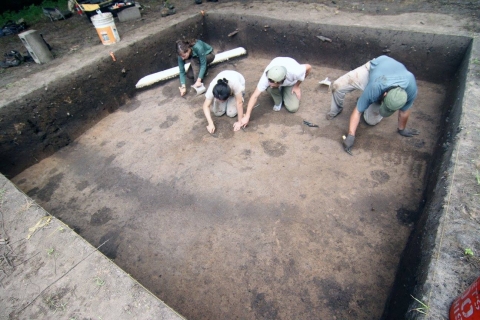
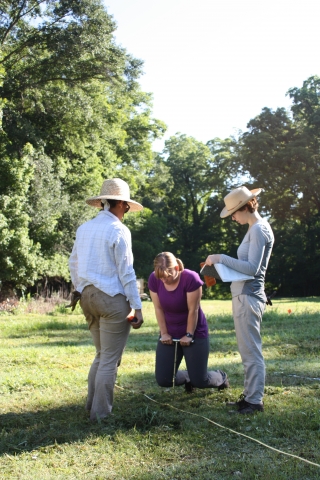
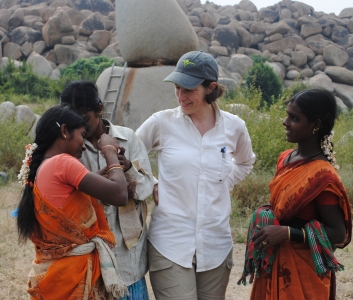
Today, the Department preserves a four-field core curriculum while continuing to pioneer innovations in anthropology and beyond. In the last five years the Department has gained a number of new faculty, including leaders in established and emerging fields of anthropology. Faculty research provides a wide range of resources for students. Research interests among cultural and linguistic anthropologists include semiotic approaches to culture, the mass media, corporations and commodities; globalization; medical anthropology; urban poverty and human rights. Physical anthropologists conduct research on population genetics, primatology, reproductive health, and human evolution in several laboratories on campus, and at the Department's field station in Argentina. Archeological research includes projects on ancient civilizations of Mesopotamia, the Maya, and the Inca; on the middle Paleolithic in Europe and the Middle East; on the historical archeology of North America; and on heritage culture around the world.

Faculty research provides a wide range of resources for students. Members of the Department play a vital role in Penn’s premier Ethnohistory Program, the Semiotics Laboratory, and the program in Public Interest Anthropology. Several faculty have concurrent appointments in units outside the School of Arts and Sciences, including the Medical School, the Annenberg School of Communication, the Graduate School of Education, and the University Museum of Archaeology and Anthropology. The Department’s instructional programs offer undergraduate and graduate students an abundance of opportunity for overseas fieldwork, for work in Penn’s urban community, and for interdisciplinary work with other programs at the University of Pennsylvania. Our vibrant Anthropology Undergraduate Society also holds events for Majors and Minors and also has its own blog.

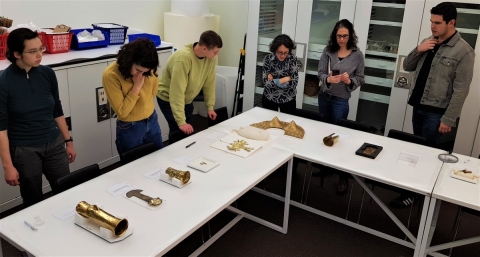
The Department is housed within the University Museum, which provides substantial resources for faculty and student research, including extensive archaeological and ethnological collections, and a library.


Please note that this site is still under construction. If you have any suggestions please contact the webmaster at anthweb@sas.upenn.edu. Thank you for your patience.

If you are having issues viewing certain pages within this site, please check your browser. Firefox is recommended and Internet Explorer will soon be better supported.