April 2022
While we tend to think of livestock mainly as a source of meat and milk, in practice they produce more dung than anything else. B. Sillar (2000:46).
As a quick-and-dirty reference to modern dairy cows, "The average dairy cow produces about 55 kg (120 pounds) of manure per day, and approximately 20 metric tons per year"; even if you cut that number in half, that's a lot of potential fuel from the family cow! ["HP Labs Designs Data Center Fueled by Manure," May 19, 2010] [Cow dung 'volatile solids' are about 60% of wet weight (Makki and Eljack 2003 ), so even "unimproved" varieties of cattle probably produce a lot dung.]
Check out this article that analyzes the influence of networks and communities of practice on the acceptance of new ideas: case study of dung fuel!
Khazraee, E. and S. Gasson
2015 Epistemic objects and embeddedness: Knowledge construction and narratives in
research networks of practice. The
Information Society: An International Journal 31 (2): 139-159.
For other dung news,
And now you can see the movie, "Yak Dung"! Here's the link: https://www.youtube.com/watch?v=ZfpTHOhExGI. "With temperatures falling as low as -40°C on the plateau, yak dung is a valuable source of warmth for herdsmen. A non-polluting fuel, it is used to burn offerings to the gods and light oil lamps. Dung can be used to build houses and walls. It is the natural fertilizer of the grasslands, and it can be used as medicine and for washing clothes. Children can even make toys out of it, while artists sometimes sculpt figurines of the Buddha out of the material. The quality of the dung is an indicator of the environmental health of the plateau and the yaks that roam it. In short, for those of us who live on the plateau, dung is something we cannot live without. But the day we will have to live without it is getting nearer and nearer, and that day we will no longer be ourselves. Filmmaker Lanzhe is a Tibetan herdsman from Qinghai Province. This is his first documentary."
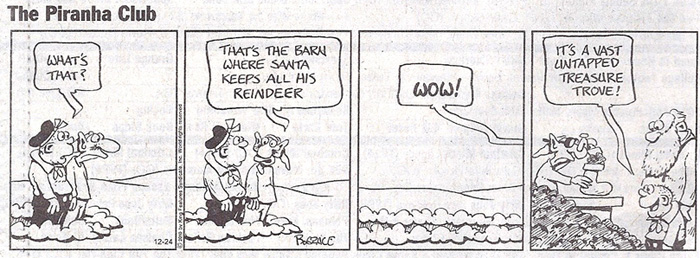
Source: Philadelphia Inquirer, December 24, 2010
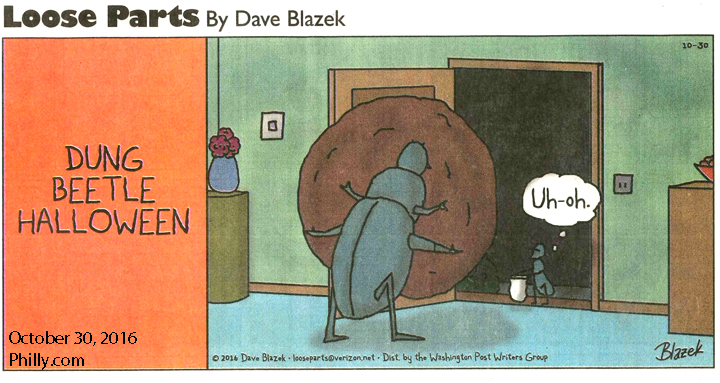
Source: Philadelphia Inquirer, October 30, 2016
Keyword organization:
Country; Site; Archaeological relevance: e.g., fuel/fertilizer/feature;
Focus if not archaeological; Animal
and thanks to Örni Akeret (OA) for providing a bunch of references
July 2023
Jakobitsch, Thorsten, Cyril Dworsky, Andreas G. Heiss, Marlu Kühn, Sabine
Rosner, and Jutta Leskovar
2023 How animal dung can help to reconstruct past forest use: A late Neolithic case study
from the Mooswinkel pile dwelling (Austria).
Archaeological and Anthropological Sciences 15(20).
Austria/macro/Mooswinkel pile dwelling
Valamoti, Soultana
2013 Towards a distinction between digested and undigested glume bases in the
archaeobotanical record from Neolithic northern Greece: A preliminary experimental
investigation. Journal of
Environmental Archaeology 18: 31-42.
Greece/experimental archaeology
Entire listing Adams, Karen R. Akeret, Örni, Jean Nicolas Haas, Urs Leuzinger, and Stéfanie
Jacomet Akeret, Örni and Stéfanie Jacomet Akeret, Örni, and Philippe Rentzel Albert, R.M. and D.O. Henry Albert, R.M., R. Shahack-Gross, D. Cabanes, A. Gilboa, S. Lev-Yadun, M.
Portillo, I. Sharon, E. Boaretto, and S. Weiner Anderson, Seona M. Anderson, Seona and Füsun Ertuğ-Yaraş Argant, Jacqueline Badenhorst, Shaw Baeten, Jan, Florias Mees, Elena Marinova, Morgan De Dapper, Dirk De Vos Dirk
Huyge, Mark Van Strydonck, Dimitri Vandenberghe, and Veerle Linseele Berna, Francesco Birk, Jago Jonathan, Wenceslau Geraldes Teixeira, Eduardo Góes Neves,
and Bruno Glaser Bogaard, Amy Bogaard A., R. Fraser, T.H.E. Heaton, M. Wallace, P. Vaiglova, M. Charles,
G. Jones, R.P. Evershed, A.K. Styring, N.H. Andersen, R.M. Arbogast, L. Bartosiewicz,
A. Gardeisen, M. Kanstrup, U. Maier, E. Marinova, L. Ninov, M. Schäfer, and E. Stephan Boschian, G. and E. Montagnari Kokelj Bottema, Sytze Bowdery, D. Braadbaart, Freek, Imogen Poole, Hans D.J. Huisman, and Bertil van Os Brinkkemper, Otto Britton, Kate and Jacqui Huntley Brochier, J.-E. Brochier J. É. Brochier J. É. Brochier J. É. Brochier J. É. Brochier, J.E., P. Villa, M. Giacomarra Broderick, Lee G. and Michael Wallace Buckland, P.C., K.J. Edwards, E. Panagiotakopulu, and J.E. Schofield Budka, J., C. Geiger, P. Heindl, V. Hinterhuber, and H. Reschreiter Bogaard, Amy Bruno, Maria C. and C. A. Hastorf Bryant, Vaughn M. and Karl J. Reinhard Buckland, P.I. and P.C. Buckland Bull, I.D., M.M. Elhmmali, V. Perret, W. Matthews, D.J. Roberts, and R.P.
Evershed Bull, Ian and Richard Evershed Bull, I.D, I.A. Simpson, P.F. van Bergen, and R.P. Evershed Buurman, Janneke Canti, M.G. Canti, M.G. Canti, M.G. Carrion, Jose S., Louis Scott, Tom Huffman, and Cobus Dreyer Charles, Michael Charles, M. and A. Bogaard Chepstow-Lusty Chepstow-Lusty, A., M.R. Frogley, B.S. Bauer, M.J. Leng, A. Cundy, K.P.
Boessenkool, and A. Gioda Conte, Thomas Courty, M. A., R. I. Macphail, and J. Wattez Crawford, Patricia Cullen, Paul and Richard Jones Darmon, F. Davies, Caleb Deckers, Katleen Delhon, C., L. Martin, J. Argant, et al. Derreumaux, Marie di Lernia, Savino Djamali, Morteza, Fereidoun Biglari, Kamyar Abdi, Valérie Andrieu-Ponel,
Jacques-Louis de Beaulieu, Marjan Mashkour, and Philippe Ponel Drescher-Schneider, Ruth Dunseth, Zachary C., Israel Finkelstein, and Ruth Shahack-Gross Dunseth, Zachary C., Fuks, Daniel, Dafna Langgut, Ehud Weiss, Yoel Melamed,
Don H. Butler, Xin Yan, Elisabetta Boaretto, Yotam Tepper, Guy Bar-Oz, and Ruth Shahack-Gross Dunseth, Zachary C. and Ruth Shahack-Gross Éguüez, N., A. Zerboni, and S. Biagetti Ejarque, Ana, Yannick Miras, and Santiago Riera Elliott, S. Robin Bendrey, J. Whitlam, and Kamal Rauf Aziz Elliott, Sarah, Robin Bendrey, Jade Whitlam, Kamal Rauf Aziz, Jane Evans
Evershed R.P., P.H. Bethell, P.J. Reynolds, and N.J. Walsh Fall, Patricia L., Steven E. Falconer, and JoAnna Klinge Fenton, Alexander Fiedel, Stuart Forbes, Hamish Fuks, D. and Z.C. Dunseth García Suárez, Aroa, Marta Portillo, and Wendy Matthews Goethals, L. and D. Verschuren Goren, Y. Greig, J. Guelat, Michel, Olivier Paccolat and Philippe Rentzel Gur-Arieh, Shira, Marco Madella, Carla Lanceolotti, Christopher Miller,
Susan M. Mentzer, Bill Finlayson, Cheryl Makarewicz, Sarah Elliottt, Jacob Vardi
1984 Evidence of wood-dwelling termites in archaeological sites in the southwestern
United States. Journal of
Ethnobiology 4(1): 29-43.
United States/archeobotany/insect
1999 Plant macrofossils and pollen in goat/sheep faeces from the Neolithic lake-shore
settlement of Arbon Bleiche 3, Switzerland.
The Holocene 9: 175-182.
Switzerland/Arbon Bleiche 3/fodder/sheep/goat/OA
1997 Analysis of plant macrofossils in goat/sheep faeces from the Neolithic lake shore
settlement of Horgen Scheller - an indication of prehistoric transhumance? Vegetation
History and Archaeobotany 6: 235-239.
Switzerland/Horgen Scheller/sheep/goat
2001 Micromorphology and plant macrofossil analysis of cattle dung from the Neolithic
lake shore settlement of Arbon Bleiche 3.
Geoarchaeology 16:
687-700.
Switzerland/Arbon Bleiche 3/fodder/cattle
2004 Herding and Agricultural Activities at the Early Neolithic Site of Ayn Abu
Nukhayla (Wadi Rum, Jordan). The Results of Phytolith and Spherulite Analyses.
Paléorient 30(2): 81-92.
Jordan/Ayn Abu Nukhayla/PPNB/spherulite/phytolith/
2008 Phytolith-rich layers from the Late Bronze and Iron ages at Tel Dor (Israel):
mode of formation and archaeological significance.
Journal of
Archaeological Science 35: 57-75.
Israel/Tel Dor/2M/1M/phytolith
1994/5 Faeces: an ethnographic and botanical study of dung fuel use in Central Anatolia
[M.Sc.].University of Sheffield.
Turkey/fuel/ethnoarch/sheep/goat/cattle/OA
1998 Fuel fodder and faeces: an ethnographic and botanical study of dung fuel use in
Central Anatolia. Environmental Archaeology 1: 99-109.
[preview]
Turkey/fuel/ethnoarch
1990 Climat et environnement au quaternaire dans le bassin du Rhôned'après
les données palynologiques. Documents du Laboratoire de Géologie de Lyon 111.
France/Neolithic cave/pollen (ancient)/sheep/goat (pp. 132-140)/
experiments in modern sheep dung (pp. 32-47)/OA
2009 Phytoliths and livestock dung at Early Iron Age sites in southern Africa. South African Archaeological Bulletin 64: 45-50.
South Africa/Central Cattle Pattern/phytolith/animal pen/cattle/sheep/goat
2018 Late Pleistocene coprolites from Qurta (Egypt) and the potential of
interdisciplinary research involving micromorphology, plant macrofossil and biomarker
analyses. Review of
Palaeobotany and Palynology 259: 93-111.
Egypt/biomarker/macroremains/rock hyrax/spherulite/bovid
2017 Geo-ethnoarchaeology study of the traditional Tswana dung floor from the
Moffat Mission Church, Kuruman, North Cape Province, South Africa.
Archaeological and
Anthropological Sciences 9(6): 1115-1123.
South Africa/cattle/ethnoarchaeology
2011 Faeces deposition on Amazonian Anthrosols as assessed from 5Beta-stanols. Journal of
Archaeological Science 38(6): 1209-1220.
on-line
Amazon/Black Earth/biomolecule
2012 Middening and manuring in Neolithic Europe: Issues of plausibbility, intensity and
archaeological method. In Manure Matters: Historical, Archaeological and
Ethnographic Perspectives, pp. 25-39, ed. R. Jones. Ashgate, Aldershot.
Europe/stable isotope
2013 Crop manuring and intensive land management by Europe's first farmers.
Proceedings of the National Academy of
Science 110: 12589-12594.
fertilizer
2000 Prehistoric shepherds and caves in the Trieste karst (northeastern Italy).
Geoarchaeology 150(4): 331-371.
[abstract].
Italy/
1984 The composition of modern charred seed assemblages. In Plants and Ancient
Man, eds. W. van Zeist and W.A. Casparie, pp. 207-212. A.A. Balkema, Rotterdam.
Syria/fuel/sheep/ethnoarch
2007 Phytolith analysis, sheep, diet and fecal material at Ambathala pastoral station
(Queensland, Australia). In Plants, People and Places. Recent Studies in Phytolith Analysis,
eds. M. Madella and D. Zurro, pp. 134-150. Oxbow Books.
Ambathala/phytolith
2012 Fuel, Fire and Heat: an experimental approach to highlight the potential of
studying ash and char remains from archaeological contexts. Journal of
Archaeological Science 39(4): 836-847.
fuel
1991 Wetland farming in the area to the south of the Meuse estuary during the Iron Age
and Roman Period. An environmental and palaeo-economic reconstruction. Analecta
Praehistorica Leidensia 24. Leiden
Netherlands/macro/goat/sheep faeces (pp. 84/89, Table 24)/OA
2011 New evidence for the consumption of barley at Romano-British military and
civilian sites, from the analysis of cereal bran fragments in faecal material.
Vegetation History and Archaeobotany 20: 41-52.
[doi:10.1007/s00334-010-0245-3]
England/Roman/diet/human
1983 Combustion et parcage des herbivores domestiques. Le point de vue du
sédimentologue. Bulletin de la Société Préhistorique
Française 80(5): 143-145.
spherulite
1991 Géoarchéologie du monde agropastoral. In Pour une archéologie
agraire, ed. J. Guilaine, p. 303-322. A. Colin, Paris.
1996 Feuilles ou fumiers? Observations sur rôle des
poussières sphérolitiques dans l'interprétation des
dépôtsarchéologiques holocènes. Anthropozoologica 24: 19-30.
2002 Les sédiments anthropiques. Méthodes d'étude et Perspectives.
In Géologie de la préhistoire: méthodes, techniques,
applications, ed. C. Miskovsky, pp. 459-477. Geopré, Paris.
2006 Des hommes et des bêtes: une approche naturaliste
de l'histoire et des pratiques de l'élevage. In Populations néolithiques et
environnements, ed. J. Guilaine, pp. 137-152. Collection des Hespérides, Errance,
Paris.
1992 Shepherds and sediments: geo-ethnoarchaeology of pastoral sites.
Journal of Anthropological Archaeology 11: 47-102. [doi:10.1016/0278-4165(92)90010-9 ]
Italy/Sicily/ethnoarchaeology/sheep/goat
2014 Manure: Valued by farmers, undervalued by zooarchaeologists. In People with
Animals: Perspectives and Studies in Ethnozooarchaeology, ed. L.G. Broderick, pp. 34-41.
Oxbow Books Ltd., Oxford.
Ethiopia/ethnoarchaeology/manure
2009 Palaeoecological and historical evidence for manuring and irrigation at Gardar
(Igaliku), Norse Eastern Settlement, Greenland. The Holocene 19: 105-116.
[abstract]
Greenland/AD/manure
2019 The question of fuel for cooking in ancient Egypt and Sudan.
Experimental Archaeology 2019/1.
Egypt/Sudan/sheep/goat/cattle/horse/donkey/experimental archaeology
2012 Middening and manuring in Neolithic Europe: Issues of plausibbility, intensity and
archaeological method. In Manure Matters: Historical, Archaeological and
Ethnographic Perspectives, pp. 25-39, ed. R. Jones. Ashgate, Aldershot.
Europe/stable isotope
2016 Gifts from the camelids: Archaeobotanical insights into camelid pastoralism through the
study of dung. In The Archaeology of Andean Pastoralism, eds. J. Capriles and N.
Tripcevich, pp. 55-65. University of New Mexico Press.
Andes/camelid
2012 Coprolites and Archaeology: The Missing Links in Understanding Human Health.
In Vertebrate Coprolites, eds. A.P. Hunt, J. Milàn, S.G. Lucas, and J.A.
Spielmann, pp. 379-387. New Mexico Museum of Natural History and Science, Albuquerque.
human
2019 When a 'waterhole' is full of dung: an illustration of the importance of environmental
evidence for refining archaeological interpretation of excavated features.
Archaeometry 61: 977-990.
England/fertilizer/entomology/dung beetles
2005 Biomarker evidence of faecal deposition in archaeological sediments at
Çatalhöyük. InInhabiting Çatalhöyük:
Reports from the 1995-99 Seasons, ed. I. Hodder, pp. 415-420. McDonald Institute
Monographs, Cambridge. [ref in Shahack-Gross 2011]
biomolecule
2012 Organic geochemical signatures of ancient manure use. In Manure Matters:
Historical, Archaeological and Ethnographic Perspectives, pp. 61-77, ed. R. Jones.
Ashgate, Aldershot.
biomarker
1999 Muck 'n' molecules: organic geochemical methods for detecting ancient manuring.
Antiquity 73: 86-96.
[ref in Shahack-Gross 2011]
biomolecule
1998/1999 Archaeobotanical investigations of a Middle and Late Bronze Age settlement site
at Westwoud (West-Friesland). Berichten van de Rijksdienst voor het Oudheidkundig
Bodemonderzoek 43: 99-140. (esp. pp. 128-131)
Netherlands/Westwoud
1997 An investigation of microscopic calcareous spherulites from herbivore dungs.
Journal of Archaeological Science 24: 219-231. [doi:10.1006/jasc.1996.0105]
spherulite
1998 The micromorphological identification of faecal spherulites from archaeological
and modern materials.
Journal of
Archaeological Science 25(5): 435-444. [doi:10.1006/jasc.1997.0210]
[ref in Shahack-Gross 2011]
spherulites
1999 The production and preservation of faecal spherulites: animals, environment and
taphonomy,
Journal of Archaeological Science 26(3): 251-258. [doi:10.1006/jasc.1996.0105]
[ref in Shahack-Gross 2011]
spherulites
2000 Pollen analysis of Iron Age cow dung in southern Africa.
Vegetation
History and Archaeobotany 9: 239-249.
South Africa/fuel/pollen/cow
1998 Fodder from dung: the recognition and interpretation of dung-derived plant material
from archaeological sites. Environmental Archaeology 1: 111-122.
fodder
2005 Identifying livestock diet from charred plant remains: a Neolithic case study from
Southern Turkmenistan. In Diet and Health in Past Animal Populations, eds. J.
Davies, M. Fabis, et al., pp. 93-103. 9th ICAZ Conference, Durham 2002. Oxbow Books,
Oxford.
Turkmenistan/Jeitun/fodder/Neolithic
2011 Agro-pastoralism and social change in the Cuzco heartland of Peru: a brief history
using environmental proxies.
Antiquity 85: 570-582.
Peru/2M/1M/AD/pollen/oribatid mites/llama
2007 Evaluating socio-economic change in the Andes using oribatid mite abundances as
indicators of domestic animal densities.
Journal of Archaeological Science 34: 1178-86. [doi:10.1016/j.jas.2006.12.023]
Peru/oribatid mites
2017 Living with Mongolian Nomads: Spring Cleaning.
https://www.youtube.com/watch?v=ZfpTHOhExGI.
Mongolia/video/
1991 Soil micromorphological indicators of pastoralism; with special reference to Arene
Candide, Finale Ligure, Italy. Rivista di Studi Liguri 57: 127-150.
Italy/Arene Candide/Neolithic cave/micromorphology/cattle/sheep-goat/OA
2003 Weeds as indicators of land-use strategies in Ancient Egypt. In Food,
Fuel and Fields. Progress in African Archaeobotany, eds. K. Newmann, A. Butler, and S.
Kahleber, pp. 107-121. Heinrich Barth Institut, KÖln.
Egypt/2M/fuel
2012 Manure and middens in English place-names. In
Manure Matters: Historical, Archaeological and Ethnographic Perspectives, pp. 97-108, ed.
R. Jones. Ashgate, Aldershot.
United Kingdom/etymology
1989 Étude de l'environnement de la Grotte de Nahal Hemar dans le désert
de Judée au Néolithique ancien d'après l'analyse des coprolithes de
chèvres, Comptes Rendus de l'Académie des Sci. 308 (1989), pp. 1759-1764.
[ref in Shahack-Gross 2011]
Israel/Nahal Hemar/Neolithic/goat
2019 Neolithic remains help sniff out the earliest human use of dung.
Horizon, 13 Aug 2019.
2011 The dung as fuel model tested at two Syrian Jezirah sites. In Holocene
Landscapes through Time in the Fertile Crescent, ed. K. Deckers. Subartu XXVII: 143-156.
2008 Shepherds and plants in the Alps: multi-proxy archaeobotanical analysis of
Neolithic dung from "La Grande Rivoire" (Isère, France).
Journal of
Archaeological Science 35: 2937-2952.
France/Neolithic
2005 How to detect fodder and litter? A case study from the Roman site "Le Marais de
Dourges," France.
Vegetation
History and Archaeobotany 14: 373-385. [doi:10.1007/s00334-005-0003-0]
France/Roman/macro/fodder
2001 Dismantling dung: delayed use of food resources among Early Holocene foragers of
the Libyan Sahara.
Journal of Anthropological Archaeology 20: 408-441. [doi:10.1006/jaar.2000.0384]
Libya/Uan Afuda Cave/droppings/micromorphology/macro/pollen/fodder
2011 Pollen analysis of coprolites from a late Pleistocene-Holocene cave deposit
(Wezmeh Cave, west Iran): insights into the late Pleistocene and late Holocene vegetation
and flora of the central Zagros Mountains.
Journal of
Archaeological Science 38: 3394-3401. doi:10.1016/j.jas.2011.08.001
Iran/Wezmeh Cave/pollen/hyena
1997+ Ergebnisse der pollen- und grossrestanalytischen Untersuchungen im Gebiet der
Plankenalm, Dachstein (Osterreich). In Vier Jahrtausende Almen im Hochgebirge,
Band 2, eds. G. Cerwinka, and F. Mandl, pp. 46-61. Haus i. E.: Verein ANISA.
Austria/post AD 1300/pollen/macro/cattle/sheep/goats/pigs)/OA
2018 Intermediate Bronze Age subsistence practices in the Negev Highlands, Israel:
Macro- and microarchaeological results from the sites of Ein Ziq and Nahal Boqer 66.
Journal of
Archaeological Science: Reports 19: 712-726 . Also online at
doi.org.
Israel/spherulite/ phytolith/ stabling
2019 Archaeobotanical proxies and archaeological interpretation: A comparative study of
phytoliths, pollen and seeds in dung pellets and refuse deposits at Early Islamic Shivta,
Negev, Israel.
Quaternary Science Reviews 211: 166-185.
Israel/Shivta/pollen/phytoliths/macro/sheep/goat
2018 Calcitic dung spherulites and the potential for rapid identification of degraded
animal dung at archaeological sites using FTIR spectroscopy.
Journal of Archaeological Science 97: 118-124.
Nahal Boqer 66/sediment analysis
2018 Microstratigraphic analysis on a modern central Saharan pastoral campsite.
Ovicaprine pellets and stabling floors as ethnographic and archaeological referential data.
Quaternary
International 483: 180-193.
Libya/ethnoarch/sheep/goat
2011 Pollen and non-pollen palynomorph indicators of vegetation and highland grazing
activities obtained from modern surface and dung datasets in the eastern Pyrenees.
Review of
Palaeobotany and Palynology 167: 123-139.
Andorra/Pyrenees/palynology/grazing
2020 Ethnoarchaeological research in Bestansur: Insights into vegetation, land-use,
animals and animal dung. In the Early Neolithic of the Eastern Fertile Crescent:
Excavations at Bestansur and Shimshara, Iraqi Kurdistan. Central Zagros Archaeological
Project, CZAP Reports 2, eds. R. Matthews, W. Matthews, K.R. Raheem and A. Richardson,
pp. 91-106. Oxbow Books, Oxford.
Iraq/ruminant
2015 Preliminary ethnoarchaeological research on modern animal husbandry in Bestansur,
Iraqi Kurdistan: Integrating animal, plant and environmental data. Environmental
Archaeology 20:283-303.
Iraq/sheep/goat/cattle/ethnoarchaeology
1997 5β- Stigmastanol and related 5β-stanols as biomarkers of manuring:
analysis of modern experimental material and assessment of the archaeological potential.
Journal of
Archaeological Science 24:485-495.
England/experimental arch
2015 Bronze age fuel use and its implications for agrarian landscapes in the eastern
Mediterranean.
Journal of Archaeological Science: Reports 4: 182-191.
1985 A fuel of necessity: animal manure. In The Shape of the Past. Essays in
Scottish Ethnology, pp. 96-111. John Donald, Edinburgh.
Scotland/fuel
2016 The spore conundrum: Does a dung fungus decline signal humans' arrival in the
eastern United States.
Quaternary International.
United States/megafauna/birds/small mammals/fungal spores
2012 Lost souls: ethnographic observations on manuring practices in a Mediterranean
community. In Manure Matters: Historical, Archaeological and Ethnographic
Perspectives, pp. 159-172, ed. R. Jones. Ashgate, Aldershot.
Greece/ethnoarchaeology
2021 Dung in the dumps: what we can learn from multi-proxy studies of archaeological dung
pellets. Vegetation History and Archaeobotany
30:137-153.
Israel/Shivka/sheep/goat/fodder/fuel/crop-processing
2018 Early animal management strategies during the Neolithic of the Konya Plain, Central
Anatolia: Integrating micromorphological and microfossil evidence.
Environmental
Archaeology. DOI: 10.1080/14614103.2018.1497831
Turkey/Boncuklu/Pınarbaşı/micromorphology/phytoliths/spherulites
2020 Tracing ancient animal husbandry in tropical Africa using the fossil spore assemblages
of coprophilous fungi: a validation study in western Uganda.
Vegetation History and Archaeobotany
29: 509-526.
Uganda/fungal spores
1999 On determining use of pastoral cave sites: a critical assessment of spherulites in
archaeology. Journal of the Israel Prehistoric Society 29: 123-128. [ref in Shahack-Gross
2011]
spherulites
1984 Garderobes, sewers, cesspits and latrines. Current Archaeology 85: 49-52. [ref in
Shahack-Gross 2011]
1998 Une étable gallo-romaine à Brigue-Glis VS/Waldmatte. Évidences
archéologiques et micromorphologiques. Annuaire de la Société Suisse
de Préhistoire et d'Archéologie 81: 171-182.
Switzerland/Iron Age/Roman/micromorphology/cattle/sheep-goat/OA
n.d. MapDung. Dung as construction material during
the emergence of animal domestication: a multi-proxy approach.
Gur-Arieh, Shira, Marco Madella, Noa Lavi, and David E. Griesem
2018 Potentials and limitations for the identification of outdoor dung plasters in
humid tropical environment: a geo-ethnoarchaeological case study from South India.
Archaeological and Anthropological
Sciences .
India/ethnoarch
Gur-Arieh, Shira, Eugenia Mintz, Elisabetta Boaretto, and Ruth Shahack-Gross
2013 An ethnoarchaeological study of cooking installations in rural Uzbekistan:
development of a new method for identification of fuel sources.
Journal of Archaeological Science 40 (12): 4331-4347.
DOI: http://dx.doi.org/10.1016/j.jas.2013.06.001
ethnoarchaeology/fuel/ash pseudomorphs/spherulites/phytoliths/PSR
Gur-Arieh, Shira, Ruth Shahack-Gross, Aren M. Maeir, Gunnar Lehmann, Louise
A. Hitchcock, and Elisabetta Boaretto
2014 The taphonomy and preservation of wood and dung ashes found in archaeological
cooking installations: Case studies from Iron Age Israel. Journal of
Archaeological Science http://dx.doi.org/10.1016/j.jas.2014.03.011.
Israel/fuel/ash pseudomorphs/spherulites/phytoliths/PSR
Haas, J.N.
2004 Mikroskopische Analyse von Schaf-Ziegenkoprolithen. In Die jungsteinzeitliche
Seeufersidlung Arbon Bleiche 3. Umwelt und Wirtschaft, eds. S. Jacomet, U. Leuzinger, and
J. Schibler, pp. 43-49. Archäologie in Thurgau 12. Frauenfeld, Kanton Thurgau.
Switzerland/Arbon Bleiche 3
Hadorn, Philippe
1994 Saint-Blaise/Bains des Dames, 1. Palynologie d'un site néolithique et
historique de la végétation des derniers 16,000 ans. Archéologie
neuchateloise 18. Musée Cantonal d'Archéologie, Neuchâtel.
Switzerland/pollen/sheep-goat (p. 55-57)/OA
Hald, Mette Marie, Jacob Mosekilde, Betina Magnussen, Martin Jensen Søe,
Camilla Haarby Hansen, Morten Fischer Mortensen
2018 Tales from the barrels: Results from a multi-proxy analysis of a latrine from
Renaissance Copenhagen, Denmark.
Journal of
Archaeological Science Reports 20: 602-610.
Denmark/human
Hall, A. and H. Kenward
1998 Disentangling dung: pathways to stable manure. Environmental Archaeology 1:
123-126.
Hall A.R., A.K.G. Jones, and H.K. Kenward
1983 Cereal bran and human faecal remains from archaeological deposits-some preliminary
observations. In Site, Environment and Economy, ed. B. Proudfoot, pp. 85-105.
British Archaeological Reports, International Series 173. Oxford.
United Kingdom/cess/human
Halligan, Jessi J., Michael R. Waters, Angelina Perrotti, Ivy J. Owens, Joshua
M. Feinberg, Mark D. Bourne, Brendan Fenerty, Barbara Winsborough, David Carlson, Daniel C.
Fisher, Thomas W. Stafford Jr and James S. Dunbar
2016 Pre-Clovis occupation 14,550 years ago at the Page-Ladson site, Florida, and the
peopling of the Americas.
Science Advances 13 May 2016: Vol. 2, no. 5, e1600375. DOI: 10.1126/sciadv.1600375
USA/megafauna/Sporormiella
Hamilakis, Yannis, Georgia Koromila, Kerry Harris, Nina Kyparissi, Georgia
Kotzamani, and Panagiotis Karkanas
The Neolithic tell as a multi-species monument: Human, animal, and plant relationships
through a micro-contextual study of animal dung remains at Koutroulou Magoula, central
Greece. Journal of Archaeological
Science 19: 753-768.
Greece/macroremains/phytolith/micromorphology
Harrison, Terry
2011 Coprolites: taphonomic and paleoecological implications. In Paleontology
and Geology of Laetoli: Human Evolution in Context, ed. T. Harrison, pp. 279-292. Springer
Science +Business Media. DOI 10.1007/978-90-481-9956-3_14
Tanzania/bovid scat/carnivore scat
Hastorf, Christine A. and Melanie F. Wright
1998 Interpreting wild seeds from archaeological sites: a dung charring experiment from
the Andes.
Journal of Ethnobiology 18: 211-227.
Bolivia/Peru/Argentina/experimental archaeology/camelid/goat/guinea pig
Hellwig, Maren
1997 Plant remains from two cesspits (15th and 16th Century) and a pond (13th Century)
from Gottingen, southern Lower Saxony, Germany.
Vegetation History and Archaeobotany 6: 105-116.
Germany/pollen in 1 sheep-goat dropping/OA
Hillman, G.C., A.J. Legge, and P.A. Rowley-Conwy
1997 On the charred seeds from Epipaleolithic Abu Hureyra: food or fuel? Current
Anthropology 38: 651-655. (reply to Miller, CA 1996).
Syria/Abu Hureyra/fuel-not
Huffman, T.N., M. Elburg, and M. Watkeys
2013 Vitrified cattle dung in the Iron Age of southern Africa. Journal of
Archaeological Science 40(10): 3553-3560.
South Africa/ethnoarchaeology/cattle
Hunt, Adrian P., Jesper Milàn, Spencer G. Lucas, and Justin A.
Spielmann,eds.
2012 Vertebrate Coprolites. New Mexico Museum of Natural History and Science,
Albuquerque.
paleontology, mostly/history
Jakobitsch, Thorsten, Cyril Dworsky, Andreas G. Heiss, Marlu Kühn, Sabine
Rosner, and Jutta Leskovar
2023 How animal dung can help to reconstruct past forest use: A late Neolithic case study
from the Mooswinkel pile dwelling (Austria).
Archaeological and Anthropological Sciences 15(20).
Austria/macro/Mooswinkel pile dwelling
James, L. H.
1928 An observed case of "spontaneus" ignition in stable manure. Journal of Agricultural
Research 36(5): 481-485.
Johansen, P.G.
2004 Landscape, monumental architecture, and ritual: a reconsideration of the South Indian
ashmounds.
Journal of Anthropological Archaeology 23: 309-330. [doi:10.1016/j.jaa.2004.05.003]
[ref in Shahack-Gross 2011]
Jones, G.E.M.
1998 Distinguishing food from fodder in the archaeobotanical record.
Environmental Archaeology 1:95-99.
fodder
Jones, John G. and Duccio Bonavia
1992 Analysis de coprolitos de llama (Lama glama) de precermico tardio de la costa
nor central del Peru. Bulletin de l'Institut Français des Études Andines 21(3):
835-852.
Peru/llama
Jones, Richard (editor)
2012 Manure Matters: Historical, Archaeological and Ethnographic Perspectives.
Ashgate, Aldershot.
Europe/United Kingdom/archaeology/ethnoarchaeology
Jones, Richard
2012 Why manure matters. In Manure Matters: Historical, Archaeological and
Ethnographic Perspectives, pp. 1-11, ed. R. Jones. Ashgate, Aldershot.
Jones, Richard
2012 Understanding medieval manure. In Manure Matters: Historical,
Archaeological and Ethnographic Perspectives, pp. 145-158, ed. R. Jones. Ashgate, Aldershot.
United Kingdom/ethnohistory
Jorgensen, Grethe
1986 Medieval plant remains from the settlement in Mollergade 6. In Analyses of
Medieval Plant Remains, Textiles and Wood from Svendborg. The Archaeology of Svendborg,
Denmark 4, ed. H. M. Jansen, pp. 45-84. Odense University Press, Odense.
Denmark/cattle? (p. 75-77)/OA
Kadowaki, Seiji, Lisa Maher, Marta Portillo, Rosa M. Albert, Chie Akashi,
Farhad Guliyev, and Yoshihiro Nishiaki
2015 Geoarchaeological and palaeobotanical evidence for prehistoric cereal storage in the
southern Caucasus: the Neolithic settlement of Göytepe (mid 8th millennium BP).
Journal of Archaeological Science 53: 408-435.
Azerbaijan/Göytepe/spherulites
Kanstrup, Marie, Mads K. Holst, Peter M. Jensen, Ingrid K. Thomsen, and Bent T.
Christensen
2013 (on line) Searching for long-term trends in prehistoric manuring practice. δ15N
analyses of charred cereal grains from the 4th to the 1st millennium BC.
Journal of Archaeological Science . [available online April 29, 2013]
Denmark/nitrogen isotopes/wheat/barley
Karg, Sabine
1998 Winter- and spring-foddering of sheep/goat in the Bronze Age Site of Fiave-Carera,
Northern Italy. Environmental Archaeology 1: 87-94.
Italy/Fiave-Carera/pollen/macro/sheep-goat/OA
Katz, O., I. Gilead, P. Bar (Kutiel) and R. Shahack-Gross
2007 Chalcolithic agricultural life at Grar, northern Negev, Israel: dry farmed cereals
and dung-fueled fires.
Paléorient 33.2:101-116.
Kenward, H.K. and A.R. Hall
2012 Dung and stable manure on waterlogged archaeological occupation sites: some
ruminations on the evidence from plant and invertebrate remains. In Manure
Matters: Historical, Archaeological and Ethnographic Perspectives, pp. 79-95, ed. R. Jones.
Ashgate, Aldershot.
United Kingdom/York/stable litter/insects
Kenward, Harry and Allan Hall
1997 Enhancing bioarchaeological interpretation using indicator groups: stable manure
as a paradigm.
Journal of Archaeological Science 24: 663-673. [doi:10.1006/jasc.1996.0149]
OA
Khazraee, E. and S. Gasson
2015 Epistemic objects and embeddedness: Knowledge construction and narratives in
research networks of practice. The
Information Society: An International Journal 31 (2): 139-159.
dung fuel in archaeobotany/epistemology/history of archaeobotany
Klee, Marlies and Lucia Wick
2007 Archäobotanische Untersuchungen: Koproliten und Mist. In Vicus
Petinesca-Vorderberg, die Ziehbrunnen. Petinesca 4: 117-130.. Archäologischen Dienst des Kantons Bern.
Switzerland/Roman
Kookuy (Saikal Zhumalieva)
2017 Incendiary
Dance of the Kelinka. [Stayin' Alive]
Kyrgyz/video
Koromila, Georgia, Panagiotis Karkanas, Yannis Hamilakis, Nina Kyparissi-Apostolika,
Georgia Kotzamani, Kerry Harris
2018 The Neolithic tell as a multi-species monument: Human, animal, and plant
relationships through a micro-contextual study of animal dung remains at Koutroulou Magoula,
central Greece. Journal of
Archaeological Science: Reports 19: 753-768.
Greece/Koutroulou Magoula/taphonomy/phytolith/spherulite/macroremains
Körber-Grohne, Udelgard
1982 Der Schacht in Fellbach-Schmiden aus botanischer und stratigraphischer Sicht.
In Eine neuentdeckte keltische Viereckschanze in Fellbach-Schmiden, Rems-Murr-Kreis, ed.
D. Planck, pp. 154-168. Germania 60.
Germany/Iron Age/pollen/macro/sheep-goat/OA
Kühn, M. and P. Hadorn
2004 Pflanzliche Makro- und Mikroresten aus Dung von Weidekäuem. In Die
jungsteinzeitliche Seeufersidlung Arbon Bleiche 3. Umwelt und Wirtschaft, eds. S. Jacomet, U.
Leuzinger, and J. Schibler, pp. 327-350. Archäologie in Thurgau 12. Frauenfeld, Kanton
Thurgau.
Switzerland/Arbon Bleiche 3
Kühn, Marlu, Ursula Maier, Christoph Herbig, Kristin Ismail-Meyer,
Matthieu Le Bailly, and Lucia Wick
2013 Methods for the examination of cattle, sheep and goat dung in prehistoric
wetland settlements with examples of the sites Alleshausen-Täschenwiesen and
Alleshausen-Grundwiesen (around cal 2900 BC) at Lake Federsee, south-west Germany.
Environmental Archaeology 18:43-57.
Germany/L. Federsee/cattle/sheep/goat
Kühn, M. and L. Wick
2010 Pflanzenreste in Koprolithen von Schafen und Ziegen: was fressen die kleinen
Wiederkäuer von Pfäffikon-Burg? [Plant remains in coprolites of sheep and goats;
what did the small ruminants of Pfäffikon-Burg eat?]. In Die horgenzeitliche
Siedlung Pfäffikon-Burg, ed. U. Eberli, pp. 256-261. Monographien der
Kantonsarchäologie Zürich 40, Zürich.
Switzerland/Pfäffikon-Burg/fodder
Kuzmicheva, E.A., H. Debella, B. Khasanov, O. Krylovich, A. Babenko, A.
Savinetsky, E. Severova, and S. Yirga
2013 Holocene hyrax dung deposits in the afroalpine belt of the Bale Mountains
(Ethiopia) and their palaeoclimatic implication.
Environmental Archaeology 18:72-81.
Ethiopia/Hyrax/pollen
Lanzhe
2013 Yak Dung.
https://www.youtube.com/watch?v=ZfpTHOhExGI. Through Their Eyes.
Mongolia/video/yak
Lancelotti, Carla and Marco Madella
2012 The 'invisible' product: developing markers for identifying dung in archaeological
contexts.
Journal of Archaeological Science 39(4): 953-963.
India/spherulite/phytolith/chemistry
Landsberg, J., J. Stol, and W. Müller
1994 Telling the sheep (dung) from the goats'. Rangeland Journal 16: 122-134.
[abstract only]
sheep and goat pellet differentiation
Laugier, Elise Jakoby, Jesse Casana, and Dan Cabanes
2022 Phytolith evidence for the pastoral origins of multi-cropping in Mesopotamia
(ancient Iraq).
Nature Scientific Reports 12:60.
Iraq/Khan Masi/phytolith
Linseele, V., E. Marinova, W. Van Neer, and P. Vermeersch
2010 Sites with Holocene dung deposits in the Eastern Desert of Egypt: visited by herders?
Journal of Arid Environments 74: 818-828. [doi:10.1016/j.jaridenv.2009.04.014]
Egypt/Sodmein/Tree Shelter/Neolithic/7m/sheep/goat/ibex
Linseele, Veerle, Heiko Riemer, Jan Baeten, Dirk De Vos, Elena Marinova, and
Claudio Ottoni
2013 Species identification of archaeological dung remains: A critical review of
potential methods.
Environmental Archaeology 18:5-17.
Madella, Marco
2003 Investigating agriculture and environment in South Asia: present and future
contributions from opal phytoliths. In Indus Ethnobiology, eds. S.A. Weber and
W.R. Belcher, pp. 199-249. Lexington Books, Lanham, Maryland.
Pakistan/Harappa/phytolith
Mahaney, W.C., C.C.R. Allen, P. Pentlavalli, A. Kulakova, J. M. Young, R.W.
Dirszowsky, A. West, B. Kelleher, S. Jordan, C. Pulleyblank, S. O'Reilly, B. T. Murphy,
K. Lasberg, P. Somelar, M. Garneau, S.A. Finkelstein, M. K. Sobol, V. Kalm, P.J.M. Costa,
R.G.V. Hancock, K.M. Hart, P. Tricart, R.W. Barendregt, T.E. Bunch and M. W. Milner
2016 Biostratigraphic evidence relating to the age-old question of Hannibal's invasion
of Italy, I: History and geological reconstruction.
Archaeometry, doi: 10.1111/arcm.12231. For blog post by Chris Allen, "How ancient
horse-dung bacteria is helping our team locate where Hannibal crossed the Alps," see
The Conversation online.
France/Punic/horse/microbial genetic analysis
Marinova, Elena, Veerle Linseele, and Marlu Kühn
2013 Bioarchaeological research on animal dung - possibilities and limitations.
Environmental Archaeology 18:1-3.
Marinova, Elena, Philippa Ryan, Wim Van Neer, and Renée Friedman
2013 Animal dung from arid environments and archaeobotanical methodologies for its
analysis: An example from animal burials of the Predynastic elite cemetery HK6 at
Hierakonpolis, Egypt.
Environmental Archaeology 18:58-71.
Egypt/phytolith/pollen/elephant
Matin, Mehran and Moujan Matin
2016 Egyptian faience glazing by the cementation method part 2: cattle dung ash as a
possible source of alkali flux.
Archaeological and
Anthropological Sciences 2016: 125-134.
Egypt/cattle/ceramics/
Matthews, Wendy
1999
Micromorphology Archive Report. Çatal Höyük 1999 Archive Report.
See especially sections 4.2, 4.3.4, 4.4, 4.5.2.3 (online)
Turkey/Çatalhöyük/stable litter/fuel
Matthews, Wendy
2010 Geoarchaeology and taphonomy of plant remains and microarchaeological residues in
early urban environments in the Ancient Near East.
Quaternary International 214:98-113. [doi:10.1016/j.quaint.2009.10.019]
West Asia/micromorphology
Matthews, W., C.A.I. French, T. Lawrence, D.F. Cutler, and M.K. Jones
2001 Microstratigraphic analysis of depositional sequences in Areas FS and SS. In
Excavations at Tell Brak, vol. 2: Nagar in the Third Millennium BC, by D. Oates, J. Oates, and
H. McDonald, pp. 353-367 (especially 363-365). McDonald Institute Monograph, Cambridge.
Syria/Tell Brak/feature/soil micromorphology/spherule
Mbae, N.B.
1990 The ethnoarchaeology of Maasai settlements and refuse disposal patterns in the
Lemek area. In Early Pastoralists of Southwestern Kenya, ed. P. Robertshaw, pp. 279-292.
British Institute in Eastern Africa Memoir, Nairobi.
Kenya/ethnoarch/cattle
Mlekuz, Dimitrij
2009 The materiality of dung: the manipulation of dung in Neolithic Mediterranean caves.
Documenta Praehistorica 36: 219-225.
Available online
Miller, Naomi F.
1982 Economy and Environment of Malyan, A Third Millennium City in Southern Iran. Ph.D.
Dissertation, Anthropology, The University of Michigan, Ann Arbor.
[on-line through DeepBlue]
Iran/Malyan/fuel
Miller, Naomi F.
1984 The use of dung as fuel: an ethnographic example and an archaeological application.
Paléorient 10(2): 71-79.
Iran/Malyan/fuel/ethnoarch
Miller, Naomi F.
1984 The interpretation of some carbonized cereal remains as remnants of dung cake fuel.
Bulletin on Sumerian Agriculture 1: 45-47
Iran/Malyan/fuel
Miller, Naomi F.
1996 Seed-Eaters of the ancient Near East: human or herbivore?
Current Anthropology 37: 521-528.
(also reply to Hillman et al.,
CA 38: 655-659)
Iran/Syria/Ali Kosh/Abu Hureyra/fuel
Miller, Naomi F. and Tristine Lee Smart
1984 Intentional burning of dung as fuel: a mechanism for the incorporation of charred
seeds into the archeological record.
Journal of Ethnobiology 4: 15-28.
Iran/Malyan/U.S./Black Mesa/ethnoarch/bison
Moore, J.G., B.K. Krotoszynski, and H.J. O'Neill
1984 Fecal odorgrams. A method for partial reconstruction of ancient and modern
diets. Digestive Diseases and Sciences n.s. 29(10): 907-911.
human/animal
Moore, K.
2016 Early Domesticated camelids in the Andes. In The Archaeology of Andean
Pastoralism, eds. J. Capriles and N. Tripcevich, pp. 17-38. University of New Mexico Press.
Andes/camelid
Morandi, Lionello F.
2018 An ethnoarchaeological case study of dung fungal spore and faecal spherulite
taphonomy in a pastoral cave deposit.
Environmental Archaeology.
Italy/ethnoarch/spherulite/fungal spore
Mouissie, A.M., P. Vos, H.M.C. Verhagen, and J.P. Bakker
2005 Endozoochory by free-ranging, large herbivores: ecological correlates and perspectives
for restoration.
Basic and Applied Ecology 6:547-558. [doi:10.1016/j.baae.2005.03.004]
Seed dispersal/cow/sheep/pony
Neef, R. and S. Bottema
1991 Mest als bron voor verkoold plantaardig materiaal uit opgravingen in het Nabije
Oosten. Waarnemingen en Experimenten. Paleo-Aktueel 2: 72-76.
Near East/fuel/experimental arch
Nezamabadi, E., A. Aali, Th. Stöllner, M. Mashkour, and M. Le Bailly
2013 Paleoparasitological analysis of samples from the Chehrabad salt mine (Northwestern
Iran). International Journal of
Paleopathology 3: 229-233.
paleoparasitology/horse
Nielsen, B., Overgaard, V. Mahler, and P. Rasmussen
2000 An Arthropod Assemblage and the Ecological Conditions in a Byre at the Neolithic
Settlement of Weier, Switzerland.
Journal of Archaeological Science 27: 209-218. [doi:10.1006/jasc.1999.0448]
Switzerland/Weier/insect
Nielsen, N.H. and S.M. Kristiansen
2014 Identifying ancient manuring: traditional phosphate vs. multi-element analysis of
archaeological soil. Journal of
Archaeological Science 42:390-398.
Denmark/manure/Celtic fields/phosphate
Ntinou, Maria and Georgia Tsartsidou
2017 Domestic and ritual use of plants and fuels in the neolithic cave of Alepotrypa,
southern Peloponnese, Greece: The wood charcoal and phytolith evidence.
Quaternary International 457: 211-227.
Greece/sheep/ritual
Panadès i Blas, Xavier, Jordi Bartolomé i Filella, Caroline
Strömberg, IgnasiSoriano i Tomàs, Paul Buckland, Karen K. Serieyssol, Joan
Bach i Plaza, Antonio Arillo Aranda, Francesca Lozar, Tony Stevenson, Lourdes Chamorro i
Lorenzo, and Peter Ditchfield
2016 The utility of livestock dung for reconstructing recent ethnological and
environmental histories.
Environmental Archaeology, doi: 10.1080/14614103.2016.1142630
Spain/ethnoarchaeology/multiproxy approach/sheep/goat
Pawlikowski, Maciej
1992 Mineralogical description of a coprolite from Uan Muhaggiag Rock Shelter, SW Libya.
Origini 16: 153-156.
Libya/Uan Muhaggiag/cattle
Pears, Ben
2012 The formation of anthropogenic soils across three marginal landscapes on Fair
Isle and in the Netherlands and Ireland In Manure Matters:
Historical, Archaeological and Ethnographic Perspectives, pp. 109-127, ed. R. Jones.
Ashgate, Aldershot.
United Kingdom/The Netherlands/Ireland
Pelling, Ruth
2000 The charred and mineralised plant remains. In A Bronze Age Ditch and Iron
Age Settlement at Elms Farm, Humberstore, Leicester, by B.M. Charles et al. Transactions
of Leicestershire Archaeological and Historical Society 74: 207-213.
England/cess
Pemberton, S. George
2010 History of Ichnology: The Reverend William Buckland (1784-1856) and the Fugitive Poets.
Ichnos 17:246-263.
paleontology/humor
Pemberton, S. George
2012 William Buckland (1784-1856) and Henry De la Beche (1796-1855): the Early History
of Coprolites. In Vertebrate Coprolites, eds. A.P. Hunt, J. Milàn, S.G.
Lucas, and J.A. Spielmann, pp. 29-43. New Mexico Museum of Natural History and Science,
Albuquerque.
paleontology/history/
Pemberton, S. George and Robert W. Frey
1991 William Buckland and his coprolitic vision. Ichnos 1: 317-325.
paleontology
Peña-Chocarro,Leonor, Guillem Pérez Jordà, Jacob Morales
Mateos, and Lydia Zapata
2015 Storage in traditional farming communities of the western Mediterranean:
Ethnographic, historical and archaeological data.
Environmental Archaeology 20: 379-389.
Morocco/ethnoarchaeology/section on storage containers made of dung!
Peña, L.P., L. Peña-Chocarro, J.J.I. Estévez, J.E.G. Urquijo
2003 Ethnoarchaeology in the Moroccan Jebala (Western Rif): Wood and dung as fuel.
In Food, Fuel and Fields, Progress in African archaeobotany, eds. K. Neumann,
A. Butler, and S. Kahlheber, pp. 163-175. Africa Praehistorica 15. Heinrich-Barth-Institut,
Köln.
Morocco/ethnoarchaeology
Perkins, Sid
2003 A human migration fueled by dung? Science News Online 164(6): 94, week
of Aug. 9, 2003 [Siberians follow dung across Beringia]
Peter, Bafentse
1999? Vitrified dung in archaeological contexts: an experimental study on the process of its
formation in the Mosu and Bobirwa areas. Botswana Journal of African Studies 15: 125-143. Pula.
Available online
Botswana/dung deposit/sheep
Ponel, Philippe, Valérie Andrieu-Ponel, Morteza Djamali, Hamid Lahijani,
Michelle Leydet, and Marjan Mashkour
2013 Fossil beetles as possible evidence for transhumance during the middle and late
Holocene in the high mountains of Talysch (Talesh) in NW Iran.
Journal of Environmental Archaeology 18: 201-210.
Iran/pastoralism/dung beetles
Portillo, Marta
2012 Domestic patterns in the Numidian site of Althiburos (northern Tunisia): The
results from a combined study of animal bones, dung and plant remains. Quaternary
International 275: 84-96.
Tunisia/Althiburos/1M BC/fuel
Portillo, Marta and Rosa M. Albert
2011 Husbandry practices and livestock dung at the Numidian site of Althiburos
(el Médéina, Kef Governorate, northern Tunisia): the phytolith and spherulite
evidence.
Journal of Archaeological Science 38: 3224-3233. doi:10.1016/j.jas.2011.06.027
Tunisia/Althiburos/phytolith/spherulite
Portillo, Marta and Rosa M. Albert
2014 Early crop cultivation and caprine herding: the evidence from phytolith and fecal
spherulite studies. In The Sands of Time. The
Desert Neolithic Settlement of Ayn Abu Nukhayla, eds. D.O. Henry and J. E. Beaver, pp.
121-137. Bibliotheca Neolithica Asiae Meridionalis et Occidentalis. ex Oriente, Berlin.
Jordan/Ayn Abu Nukhayla/Neolithic/spherulite/fodder
Portillo Marta, Rosa M. Albert, and Donald O. Henry
2009 Domestic activities and spatial distribution in Ain Abū Nukhayla (Wadi Rum,
southern Jordan): the use of phytoliths and spherulites studies.
Quaternary
International 193:174-183.
Jordan/PPN
Portillo, Marta, Rosa M. Albert, Seiji Kadowaki, and Yoshihiro Nishiaki
2010 Domestic activities at Early Neolithic Tell Seker al-Aheimar (Upper Khabur,
Northeastern Syria) through phytoliths and spherulites studies. In Des hommes et
des plantes. Exploitation du milieu et gestion des ressources végétales de
la préhistoire à nos jours. XXXe rencontres internatinales d'archéologie et
d'histoire d'Antibes, eds. C. Delhon I. Théry-Parisot, S. Thiébault, pp.
19-30. Éditions APDCA, Antibes.
[Download PDF]
Syria /T. Seker al-Aheimar/PPNB
Portillo, M., M.C. Belarte, J. Ramon, N. Kallala, J. Sanmartí, and R.M.
Albert
2017 An ethnoarchaeological study of livestock dung fuels from cooking installations in
northern Tunisia. Quaternary
International 431: 131-144.
Tunisia/fuel/ethnoarchaeology/sheep/goat/phytolith/spherulite/ash pseudomorph
Portillo, Marta, Kate Dudgeon, Georgia Allistone, Kamal Raeuf Aziz, and Wendy
Matthews
2020 The Taphonomy of Plant and Livestock Dung Microfossils: An Ethnoarchaeological and
Experimental Approach. Environmental Archaeology.
DOI:10.1080/14614103.2020.1800344
experimental archaeology/cattle/sheep/goat
Portillo, Marta, Aroa García Suárez, Arkadiusz Klimowicz, Marek
Zbigniew Barański, and Wendy Matthews
2019 Animal penning and open area activity at Neolithic Çatalhöyük,
Turkey.
Journal of Anthropological Archaeology 56. DOI: 10.1016/j.jaa.2019.101106
Turkey/Çatalhöyük/micromorphology/phytoliths/spherulites
Portillo, Marta, Seiji Kadowaki, Yoshihiro Nishiaki, and Rosa M. Albert
2013 Early Neolithic household behavior at Tell Seker al-Aheimar (Upper Khabur, Syria):
a comparison to ethnoarchaeological study of phytoliths and dung spherulites. Journal of
Archaeological Science, online Nov. 7, 2013.
Syria/T. Seker al-Aheimar/PPNB/storage/ethnoarchaeology/fuel/building material
Proctor, Lucas, Alexia Smith, and Gil J. Stein
2022 Archaeobotanical and dung spherulite evidence for Ubaid and Late Chalcolithic fuel,
farming, and feasting at Surezha, Iraqi Kurdistan.
Journal of Archaeological Science: Reports 43: 103449.
Iraq/Surezha/spherulite
Ramprasad, Vanaja
2012 Manure, soil and the Vedic literature: agricultural knowledge and practice on the
Indian subcontinent over the last two millennia. In Manure Matters: Historical,
Archaeological and Ethnographic Perspectives, pp. 173-181, ed. R. Jones. Ashgate, Aldershot.
India/ethnohistory
Ramsay, Jennifer and Yotam Tepper
2010 Signs from a green desert: a preliminary examination of the archaeobotanical
remains from a Byzantine dovecote near Shivta, Israel.
Vegetation
History and Archaeobotany 19: 235-242.
Israel//Shivta//AD
Rasmussen, Peter
1989 Leaf Foddering in the earliest Neolithic agriculture. Evidence from Switzerland and
Denmark. Acta Archaeologica 60: 71-85.
Switzerland/Neolithic/fodder/experimental/cattle)/OA
Rasmussen, Peter
1989 Leaf-foddering of Livestock in the Neolithic: archaeobotanical evidence from Weier,
Switzerland. Journal of Danish Archaeology 8: 51-71.
Switzerland/Neolithic/fodder/experimental/cattle)/OA
Rasmussen, Peter
1993 Analysis of goat/sheep faeces from Egolzwil 3, Switzerland: evidence for branch and
twig foddering of livestock in the Neolithic.
Journal of Archaeological Science 20: 479-502. [doi:10.1006/jasc.1993.1030]
Switzerland/Egolzwil 3/fodder
Reddy, Seetha N.
1998 Fueling the hearths in India: the role of dung in paleoethnobotanical interpretation.
Paléorient 24 (2): 61-70.
India/ethnoarch
Regev, L., D. Cabanes, R. Homsher, A. Kleiman, S. Weiner, I. Finkelstein,
R. Shahack-Gross
2015 Geoarchaeological investigation in a domestic Iron Age quarter, Tel Megiddo, Israel.
BASOR 374: 135-157.
Israel/T. Megiddo/geoarchaeology/FTIR spectroscopy/phytoliths/micromorphology
Rhode, David, David B. Madsen, P. Jeffrey Brantingham, Tsultrim Dargye
2014 Yaks, yak dung, and prehistoric human habitation of the Tibetan Plateau. Developments in
Quaternary Sciences 9: 205-224
Tibet/fuel/yak/ethnoarchaeology
Rhode, D., D.B. Madsen, P.J. Brantingham, and T. Goebel
2003 Human occupation of the Beringian mammoth steppe: Starved for fuel or dung-
burner’s paradise? Current Research in the Pleistocene 20: 68-70.
Beringia/fuel/mammoth
Richard, Herve
1986 Analyse pollinique des niveaux archéologiques et des coprolithes. In
Les sites littoraux néolithiques de Clairvaux-les Lacs, Jura. I.:
Problématique generale. L'exemple de la station III, ed. P. Petrequin, pp.
149-153. Edition de la Maison des Sciences de l'Homme, Paris.
France/Neolithic, pollen/sheep-goat (pp. 152-153 )/OA
Riehl, Simone
1999 Tierhaltung
und Ökologie in Tell el 'Abd.
sheep/goat (nice photo, too!)
Robinson, David and Bent Aaby
1994 Pollen and plant macrofossil analyses from the Gedensby Ship - a Medieval
shipwreck from Falster, Denmark. Vegetation History and Archaeobotany 3: 167-182.
Denmark/cattle (horses?)/OA
Robinson, David and Peter Rasmussen, Peter
1989 Botanical investigations at the Neolithic Lake Village at Weier, North East
Switzerland: leaf hay and cereals as animal fodder. In The Beginnings of
Agriculture, eds. A. Milles, D. Williams, and N. Gardner, pp. 149-163. BAR International
Series 496, Oxford.
Switzerland/Weier/fodder/fertilizer
Romina Sandra Petrigh, Nadia Jimena Velázquez, Martín Horacio Fugassa,
Lidia Susana Burry, Mariana Mondini, and María Alejandra Korstanje
2021 Herbivore coprolites from the South-Central Andes. A multiproxy study at Los Viscos
archaeological site, Catamarca, Argentina.
Journal of
Archaeological Science: Reports 38 (103063).
Argentina/goat
Rosas, C.A., D.M. Engle, J.H. Shaw, & M.W.
Palmer
2008 Seed dispersal by Bison bison in a tallgrass prairie. Journal of Vegetation Science
,
on-line
Seed dispersal/bison
Rosen, Steven A., Arkady B. Savinetsky, Yosef Plakht, Nina K.Kisseleva, Bulat F.
Khassanov, Andrey M. Pereladov, and MordecaiHaiman
2005 Dung in the desert: preliminary Results of the Negev Holocene Ecology Project.
Current Anthropology 46:317-327.
Israel/Negev/rockshelter/sheep/goat
Rouppert, V., J.-Y. Dafour, K. Fechner
2011 An example of a fruitful discussion between a pedologist and an archaeologist. A
1st-4th century AD agricultural enclosure with a stable and a manure pit at "Chapelle
Saint-Nicolas" inSaint-Brice-sous-forêt (Val-d'Oise, France). In
Archaeology, Soil- and Life-Sciences Applied to Enclosures and Fields, eds. K. Fechner,
Y. Devos, M. Leopold, and J. Völkel, pp. 133-142. BAR International 2222.
France/Chapelle Saint-Nicolas/AD/
Sareiya, K.P. and P. Venkataramany
1962 Use of cattle-dung as manure and domestic fuel. Indian Forester 88: 718-724.
India/fertilizer/fuel/ethno
Schelvis, Jaap
1992 The identification of archaeological dung deposits on the basis of remains of
predatory mites (Acari; Gamasida).
Journal of
Archaeological Science 19: 677-682. [doi:10.1016/0305-4403(92)90037-4]
Netherlands/entomology/OA
Schepers, Mans and Henk Van Haaster
2015 Dung matters: An experimental study into the effectiveness of using dung from
hay-fed livestock to reconstruct local vegetation. Environmental Archaeology 20: 66-81.
cattle/sheep/goat/experimental archaeology
Schofield, J. Edward and Kevin J. Edwards
2011 Grazing impacts and woodland management in Eriksfjord: Betula,
coprophilous fungi and the Norse settlement of Greenland.
Vegetation History and Archaeobotany 20: 181-197. [doi:10.1007/s00334-011-0281-7]
Greenland/Viking/land use
June, 2011
Shahack-Gross, Ruth
2011 Herbivorous livestock dung: formation, taphonomy, methods for identification, and
archaeological significance.
Journal of Archaeological Science 38(2): 205-218. [doi:10.1016/j.jas.2010.09.019]
sheep/goat/cattle/review
Shahack-Gross, R.
2017 Animal gathering enclosures. In Archaeological Soil and Sediment
Micromorphology, eds. C. Nicosia and G. Stoops, pp. 265-280. Wiley, Hoboken, New Jersey.
Shahack-Gross, Ruth, Rosa-Maria Albert, Ayelet Gilboa, OrnaNagar-Hilman, Ilan
Sharon, Steve Weiner
2005 Geoarchaeology in an urban context: the uses of space in a Phoenician monumental
building at Tel Dor (Israel).
Journal of Archaeological Science 32: 1417-1431. [doi:10.1016/j.jas.2005.04.001]
Israel/Tel Dor/1M/feature/micromorphology/phytolith
Shahack-Gross, R., F. Berna, P. Karkanas, and S. Weiner
2004 Bat guano and preservation of archaeological remains in cave sites.
Journal of
Archaeological Science 31:1259-1272.
[doi:10.1016/j.jas.2004.02.004] [ref in Shahack-Gross 2011]
bat guano
Shahack-Gross,Ruth, Elisabetta Boaretto, Dan Cabanes, Ofir Katz and Israel
Finkelstein
2014 Subsistence economy in the Negev Highlands: the Iron Age and the Byzantine/Early
Islamic period. Levant
46: 98-117.
Israel/pastoralism/phytolith/spherulite
Shahack-Gross, Ruth and Israel Finkelstein
2007 Subsistence practices in an arid environment: a geoarchaeological investigation in
an Iron Age Site, the Negev highlands, Israel.
Journal of
Archaeological Science 35: 965-982. [doi:10.1016/j.jas.2007.06.019]
Levant/animal pen/1M/Early Iron Age/Atar Haroa
Shahack-Gross, Ruth, Fiona Marshall, and Steve Weiner
2003 Geo-ethnoarchaeology of pastoral sites: the identification of livestock enclosures
in abandoned Maasai settlements.
Journal of Archaeological Science 30: 439-459. [doi:10.1006/jasc.2002.0853]
Kenya/boma/stable litter/cattle/caprine/micromorphology/phytolith
Shahack-Gross, Ruth, Allison Simons, and Stanley H. Ambrose
2008 Identification of pastoral sites using stable nitrogen and carbon isotopes from bulk
sediment samples: a case study in modern and archaeological pastoral settlements in Kenya.
Journal of
Archaeological Science 35: 983-990. [doi:10.1016/j.jas.2007.07.002]
Maasai/animal pen
Shiel, Robert
2012 Science and practice: the ecology of manure in historical retrospect. In
Manure Matters: Historical, Archaeological and Ethnographic Perspectives, pp. 13-23, ed.
R. Jones. Ashgate, Aldershot.
Roman classical authors
Shillito, Lisa-Marie, Ian D. Bull, Wendy Matthews, Matthew J. Almond, James M.
Williams, and Ricard P. Evershed
2011 Biomolecular and micromorphological analysis of suspected faecal deposits at
Neolithic Çatalhöyük, Turkey.
Journal of
Archaeological Science 38(8): 1869-1877.
Turkey/Çatalhöyük/human
Shillitoe, Lisa-Marie, Wendy Matthews, Ian Bull and James Williams
2013 Biomolecular investigations of faecal biomarkers aat Sheikh-e Abad and Jani.
In The Earliest Neolithic of Iran: 2008 Excavations at Sheikh-e Abad and Jani,
eds. R. Matthews, W. Matthews, and Y. Mohammadifar, pp. 105-116. Central Zagros
Archaeological Project, CZAP Reports 1. Oxbow Books, Oxford.
Iraq/coprolite/biomolecule/omnivore/ruminant
Sidoroff, Maria Louise
2019 Experimental bonfirings of pottery with camel dung fuel, Jordan, July 2018.
Experimental Archaeology, EXARC.net 2019/2.
ethnoarchaeology/fuel/camel
Sillar, B.
2000 Dung by preference: the choice of fuel as an example of how Andean pottery
production is embedded within wider technical, social and economic practices.
Archaeometry 42(1): 43-60. [doi:10.1111/j.1475-4754.2000.tb00865.x]
Simpson, Ian A., Orri Vésteinsson, W. Paul Adderley, and Thomas H.
McGovern
2003 Fuel resource utilisation in landscapes of settlement.
Journal of Archaeological Science 30: 1401-1420. doi:10.1016/S0305-4403(03)00035-9
Iceland/fuel/micromorphology
Smith, Alexia, Lucas Proctor, Thomas C. Hart, and Gil J. Stein
2018 The burning issue of dung in archaeobotanical samples: a case-study integrating
macro-botanical remains, dung spherulites, and phytoliths to assess sample origin an fuel
use at Tell Zeidan, Syria.
Vegetation History and Archaeobotany.
Syria/spherulite/phytolith
Smith David, Kalla Nayyar, Danielle Schreve, Richard Thomas, and Nicki Whitehouse
2014 Can dung beetles from the palaeoecological and archaeological record indicate herd
concentration and the identity of herbivores?
Quaternary
International 341:119-130.
England/archaeoentomology
Spengler, Robert N. III
2018 Dung burning in the archaeobotanical record of West Asia: where are
we now?.
Vegetation History and Archaeobotany.
West Asia/fuel
Stika, Hans-Peter
1995 Fuente Alamo. Die archäobotanische Untersuchung einer bronzezeitlichen
Siedlung in Südostspanien. In Res archaeobotanicae, International Workgroup
for Palaeoethnobotany, Proceedings of the Ninth Symposium, Kiel 1992. eds. H. Kroll and
R. Pasternak, pp. 309-316. Oetker-Voges-Verlag, Kiel.
Spain/macro/fuel?/>100 carbonised sheep-goat droppings (p. 314)/OA
Stiner, Mary C., Hijlke Buitenhuis, Güneş Duru, Steven L. Kuhn, Susan
M. Mentzer, Natalie D. Munroe, Nadja Pöllath, Jay Quade, Georgia Tsartsidou, and
Mihriban Özbaşaran
2014 A forager–herder trade-off, from broad-spectrum bhunting to sheep management at
Aşıklı Höyük, Turkey
Turkey/Aşıklı Höyük/feature [evidence of stalling]/caprine
Proceedings of the National Academy of
Sciences, early edition.
Turkey/Aşıklı H/early animal husbandry/caprine/stabling
Szpak, Paul, Jean-François Millaire, Christine D. White, Fred J.
Longstaff
2012 Influence of seabird guano and camelid dung fertilization on the nitrogen isotopic
composition of field-grown maize (Zea mays).
Journal of
Archaeological Science 39: 3721-3740. doi:10.1016/j.jas.2012.06.035
Peru/isotope/camelid/guano
Therkorn, L. L., R. W. Brandt, J. P. Pals and M. Taylor
1984 An Early Iron Age farmstead: Site Q of the Assendelver Polders Project.
Proceedings of the Prehistoric Society 50: 351-373.
Netherlands/pollen/fuel?/cattle/sheep-goat/OA
Thompson, G.B.
1996 Ethnographic models for interpreting rice remains. In The Excavation of
Khok Phanom Di, A Prehistoric Site in Central Thailand, vol. IV. Subsistence and
Environment: The Botanical Evidence, by G.B. Thompson, pp. 119-150. Society of
Antiquities, London.
Thailand/Khok Phanom Di/threshing floor/ethnoarch
Tomescu, Alexandru Mihail Florian, Valentin Radu, and Dragos
Moise
2003 High resolution stratigraphic distribution of coprolites withinneolithic middens,
a case study: Harsova-Tell (Constanta County,southeast Romania. Environmental Archaeology
8: 97-109.
Romania/Harsova-Tell/coprolite/dog/pig/human
Troels-Smith, J.
1955 Pollenanalytische Untersuchungen zu einigen schweizerischen Pfahlbauproblemen.
In Das Pfahlbauproblem, ed. W. U. Guyan, pp. 11-68. Monographien zur Ur- und
Frühgeschichte der Schweiz 11. Birkhauser, Basel.
Switzerland/pollen/3 sheep-goat droppings (pp. 28-32)/OA
Troels-Smith, J.
1984 Stall-feeding and field manuring in Switzerland about 6000 years ago. Tools and
Tillage 5: 13-25.
Switzerland/fodder/fertilizer
Valamoti, S.M.
2007 Detecting seasonal movement from animal dung: an investigation in Neolithic
northern Greece. Antiquity
81:1053-1064. [ref in Shahack-Gross 2011]
Greece/Neolithic/Makriyalos/Apsalos/Mandalo/Makri/seasonality/6M/5M
Valamoti, Soultana Maria
2013 Towards a distinction between digested and undigested glume bases in the
archaeobotanical record from Neolithic northern Greece: A preliminary experimental
investigation.
Environmental Archaeology 18:31-42.
Valamoti, Soultana Maria and Mike Charles
2005 Distinguishing food from fodder through the study of charred plant remains: an
experimental approach to dung-derived chaff.
Vegetation
History and Archaeobotany 14: 528-533. [doi:10.1007/s00334-005-0090-y]
Greece//Makriyalos//Makri//Late Neolithic//goat
van der Veen, Marijke
2007 Formation processes of desiccated and carbonized plant remains-the identification
of routine practice.
Journal of
Archaeological Science 34:960-990. [doi:10.1016/j.jas.2006.09.007]
Egypt/Sudan/fodder/fuel/temper
van Geel, Bas, Janneke Buurman, Otto Brinkkemper, Jaap Schelvis, André
Aptroot, Guido van Reenen, and Tom Hakbijl
2003 Environmental reconstruction of a Roman Period settlement site in Uitgeest
(The Netherlands), with special reference to coprophilous fungi.
Journal of Archaeological Science 30(7): 873-883. [doi:10.1016/S0305-4403(02)00265-0]
The Netherlands/Uitgeest/Roman/fungus
Varisco, Daniel
2012 Zibl and
Arabian Peninsula/ethnohistory
Waddington, Kate
2012 (Re)cycles of life in Late Bronze Age southern Britain. In Manure
Matters: Historical, Archaeological and Ethnographic Perspectives, pp. 41-59, ed. R. Jones.
Ashgate, Aldershot.
United Kingdom/middens
Wallace, Michael and Michael Charles
2013 What goes in does not always come out: The impact of the ruminant digestive system
of sheep on plant material, and its importance for the interpretation of dung-derived
archaeobotanical assemblages.
Environmental Archaeology 18:18-30.
sheep
Warington, K.
1924 The influence of manuring on the weed flora of arable land.
Journal of Ecology 12: 111-126.
fertilizer/ethno
Wasylikowa, Krystyna
1992 Holocene flora of the Tadrart Acacus area, SW Libya, based on plant macrofossils
from Uan Muhuggiag and Ti-nTorha/Two Caves Archaeological Sites. Origini 16: 125-152,
157-159. (photograph)
Libya/Uan Muhaggiag/sheep/goat
Wilson, D.G.
1979 Horse dung from Roman Lancaster. Archaeo-Physika 8: 331-350.
England/Lancaster/horse
Winterhalder, B., R. Larsen, and R. B. Thomas
1974 Dung as an essential resource in a highland Peruvian community.
Human Ecology 2: 89-104.
[doi:10.1007/BF01558115]
Peru/fertilizer/fuel/ethno/llama/alpaca/cattle/sheep
Wright, Milt
1986 Le bois de vache: This chip's for you. Saskatchewan Archaeology 7: 25-28.
fuel/bison
Wright, Milt
1992 Le bois de vache II: This chip's for you too. In Alberta: Studies in the
Arts and Sciences, ed. J. Foster and D. Harrison. Vol. 3, No. 2, pp. 225-244. The
University of Alberta Press.
fuel/bison
Xin Wang, Benjamin T. Fuller, Pengcheng Zhang, Songmei Hu, Yaowu Hu and
Xue Shang
2018 Millet manuring as a driving force for the Late Neolithic agricultural expansion of
north China.
Nature Scientific Reports 8:5552. [DOI:10.1038/s41598-018-23315-4]
China/pig/fertilizer/
Zapata Peña, Lydia, Leonor Peña-Chocarro, Juan José
Ibáñez Esté, and JesúsGonzález Urquijo
2004 Ethnoarchaeology in the Moroccan Jebala (Western Rif): Woodand dung as fuel.
In Food, Fuel and Fields. Progress in African Archaeobotany, eds. K. Neumann, A.
Butler, and S. Kahlheber, pp.163-175. Heinrich-Barth Institut, Köaut;ln.
Morocco/fuel/ethnoarchaeology
Zimmermann, W. H.
1999 Why was cattle-stalling introduced in prehistory? The significance of byre and
stable and of outwintering. In Settlement and Landscape, Proceedings of a
Conference in Arhus, Denmark, May 4-7 1998, eds. C. Fabech and J. Ringtved, pp. 295-312.
Jutland Archaeological Society. Arhus.
[Download PDF]
N. Europe/cattle/fertilizer
Zimmermann, W. H.
1999 Favourable conditions for cattle farming, one reason for the Anglo-Saxon migration
over the North Sea? About the Byre's evolution in the area south and east of the North Sea
and England. In In Discussion with the Past, eds. H. Sarfatij, W. H. Verwers and
P. J. Woltering, pp. 129-144. Archaeological Studies Presented to W. A. van Es. Amersfoort.
[
Download PDF]
N. Europe/cattle/fertilizer
Zimmermann, W. H.
1999 Stallhaltung und Auswinterung der Haustiere in ur- und frühgeschichtlicher
Zeit, Beiträge zur Mittelalterarchäologie in Österreich 15, 1999, pp. 27-33.
[Download PDF]
N. Europe/fertilizer
Zimmermann, W. Haio
2014 Anmerkungen zur Geschichte des Stalles von der Urgeschichte bis zur Neuzeit
am Beispiel von Rinderstall und Schweinekoben.
Praehistorica XXXII/2: 329-358. Univerzita Karlova V Praze.
N.Europe/pig sties/cattle byres/phosphate/ethno
An edited exchange from the Archaeobotany List (Archaeobotany@ucl.ac.uk)
On Mon, 14 Apr 1997, Naomi Miller wrote:
Does anyone know how hot a dung-fueled fire burns? Or have a reference? Several people
have asked me this question in just the past month! Clearly a hot topic.
From: GuildD@aol.com
It burns a lot cooler than a wood fire, with
a steady low flame. In India, it is used as fuel for cooking. Whomever does the cooking
"puts the pot on to boil" in the morning and leaves for the daily work. Upon returning for
lunch the meal is done. In addition, it's free. See Marvin Harris, "Cows, Pigs, Wars and
Witches"
From: kealhofer lisa k
Rice's citations and discussions of open pit firing commonly include grass, wood, and
dung. The temperatures range from 550 C to 900 C. Temperatures in enclosed spaces, such
as kilns, ovens, or even hearths may be at the upper end of this range and higher. [Rice
1987:156, 164,165]
From: Alwynne Beaudoin
Milt Wright (1986) Le Bois De Vache: This Chip's For You. Saskatchewan Archaeology 7:
25-28.
Milt Wright (1992) Le Bois De Vache II: This Chip's For You Too. In Alberta: Studies in
the Arts and Sciences, edited by John Foster and Dick Harrison. Vol. 3, No. 2, pp. 225-244.
The University of Alberta Press.
Milt, who was formerly a colleague of mine here at the Provincial Museum, carried out a
number of experiments with burning bison dung, and comparing the temperatures with fires
from wood (poplar and spruce). He was concerned to investigate the effectiveness of dung
fires. Although serious science, the papers are also well worth reading for Milt's sense
of humour and writing style.
From: Delwen Samuel
Regarding temperatures of dung-fuelled fires,
my experiment in Egypt with local village-made dung cake fuel (using palm fronds for
initial tinder) produced a maximum of 640 degrees C in 12 minutes, falling to 240 degrees
C after 25 minutes and 100 degrees C after 46 minutes. These temperatures were obtained
without refuelling and without bellows etc. I'm not sure what the dung consisted of
exactly but was probably a mixture of water buffalo, cow, and perhaps donkey dung. The
full time/temperature records are published on p. 276 in:
D. Samuel (1989) Their staff of life: Initial investigations on ancient Egyptian bread baking In:
B. J. Kemp, ed. Amarna Reports V, London: Egypt Exploration Society, pp 253-290.
From: M. Madella
From our ethnographical observation in Pakistan, cow/buffalo dung is also used to fire pottery.
The kilns are prepared with layers of dung + whatever organic thing that can burn
(paper/straw/dead branches...) and pottery. Then are sealed with soil, leaving some holes for the
fumes and to control the burning. In general dung is the principal source of fuel.
Of course it is the major source of fire for house cooking. In the desertic areas dung from
camel is also used.
The Baloochi tribes that live in the Thar during the winter use sheep/goat dung to make
fires with a lot of smoke outside their huts - this keeps under control the mosquitos!
At the moment I am working on the phytolith content of such fires in comparison with
the fireplaces for cooking (where a mixture of camel/cow dung and wood is used) and,
although the results are very very preliminary, it seems to be possible to discriminate
between the two different fires on the base of phytolith assemblages.
From: Ruth Shahack-Gross, e-mail Sept. 21, 2006
I conducted an experimental firing of dung in an open fire. Cattle dung reached a maximum
of 630 degrees Celsius and sheep dung a maximum of 570C. The pellets, especially those
from the sheep, continue to smolder for quite a long time and essentially have the same
characteristics as those of live embers. It is quite a good fuel material. This experiment
was done as part of my work published in the Tel Dor article (Shahack-Gross et al. 2005)
Dung and Kazakh Cooking (back to top of
page)
Julia McLean writes (email, April 20, 2015):
Another friend from northwest Xinjiang, Khaulan, tells me that corn was the base of his
parents' diets, growing up in the 1960s/70s in Tacheng, a small city just 15 kilometers
from the Kazakh border. The father spent his first ten years in a yurt, until his family
was forcibly relocated to the town. Apparently-oh and I just loved hearing about this, I
thought of you-one of the biggest emotional losses for his father's family, and really for
all of the families in his town who shifted to urban living, was the change in taste when
they stopped cooking with dung fuel. In the beginning, they all bought dung from rural
neighbors, but as time has gone on and the population has become increasingly urbanized,
dung fuel is nearly impossible to come by. Even when they can buy it, the question becomes
where to store it? Nobody wants a bunch of dung in their tiny apartment. One of the
biggest changes to "being Kazakh," he thinks, happened when families switched to wood
fires, and then to gas or electric. Not only did they lose the characteristic flavor, but
the style of cooking itself changed to adapt to higher temperatures and faster cooking
times.
Khaulan wasn't the only one to emphasize the importance of dung fuel to "real Kazakh cooking." Talking about food with the old man from Qyzylorda, a girl my age from Taraz, and a boy my age from a teensy village near the Kyrgyz border, all three came back to the very special taste imparted by dung fuel. The best dung comes from a hay called "chi" [a Stipa sp./Achnatherum splendens]. Bread, in particular, they told me, benefits from the slow, even heat of a dung fire, producing a tenderer crumb than that from a wood-burning oven. Elmira, the girl from Taraz, emphasized that dung-fired bread lasts much longer than wood-fired bread. Taba nan, as it is called, is cooked between two pans directly in the fire. The bread takes longer to bake, but will not go stale for over a week. "A week, two weeks, and it is still tender!" Uzbek and Uighur bread, by contrast, is "impatient bread" meant to be eaten the day it is baked. Elmira calls this a difference between city bread and nomad bread. When I asked friends from northern Kazakhstan about taba nan, however, I got blank stares. "Only southern Kazakhs eat a lot of bread," they said. "We eat meat. And now potatoes."
Dung and World War II (back to top of
page)
The Secrets of War, copyright 1998 Documedia group.
An interview with D. Fisher; here is an excerpt:
DF: ...They found uh, some forms of pigment, they found all kinds of...what they didn't find, what they couldn't find was something that would give the paint the right color. Uh, so eventually what they did was took camel dung, of which there was an abundance in the desert, and they mixed it into the paint and they created this camouflage paint that eventually for almost a year was the only thing that they used in the desert. And it created the right, obviously created the right color.
Q: So did they make a run on camel dung?
DF: So once they used camel dung, what happened was camel dung actually had a lot of uses in the desert, it was used to heat stoves, to bake bread, to do all kinds of things. Uh, so Maskelyn, because they needed massive amounts, sent out all his people with burlap bags, and they would walk along camels, and they would pick it up and uh,obviously among the Egyptians they would look and they would say, "Who are these strange British people who are fighting us for the camel dung?"
Q: (unintelligible)
DF: The other thing with camel dung that was....(long pause)
Q: The other thing....
DF: One of the, Maskelyn really got involved, to prove his worth Maskelyn got involved
in a lot of different projects very quickly after he arrived in the desert. One of them
was that the British were trying to make uh, different sort of lines uh, trying to make
different sort of mines to blow up the Germans tanks, and at one point Maskelyn created,
or helped create small explosives that looked like camel dung because it was known that
Germans tank drivers, it was good luck to drive your tank over camel dung. So Maskelyn
made these small mines that looked like camel dung,and the Germans would drive their tanks
over it, they would blow up, they would blow up the track, put the tank out of action, and
it became known that Maskelyn, that they were doing this, and there was an order that went
out to the German tank drivers not to drive over camel dung. So then what Maskelyn started
doing is he started making these things that looked like camel dung that a tank had
already driven over, it had tracks in it, so when the tank drivers saw these things that
had already been driven over, they knew they were safe, they drove over them, and again
the tracks exploded.
[NFM: Amazing what you find when you do a search for "camel dung"!]
And why did the Germans think camel dung was lucky? Maybe the answer is to be found at the microbial level; (relevant part in English).
Dung and the CIA
When the CIA's secret gadget-makers invented a listening device for the Asian jungles, they disguised it so the enemy would not be tempted to pick it up and examine it: The device looked like tiger droppings.The guise worked. Who would touch such a thing? The fist-size, brown transmitter detected troop movements along the trails during fighting in Vietnam, a quiet success for a little-known group of researchers at the intelligence agency.--Tim Bridis, Philadelphia Inquirer (January 4, 2004)
To see an attractive photograph (from Turkey) of this useful substance, click here, or link to some from ancient Syria!
Dung in the News [some links may not work anymore]
Camels' Manure. From Waste to a Worthwhile Farming Agent (from the camel4all.blog; Traditional Animal Genetic Resources for Food Security Under Climate Change Influence, 2016)
The author, Dr. Raziq (an animal agriculture PhD) comments that a 600 kg dairy(!) camel produces 15-17 kg dry manure daily. He suggests it could help compost date palm waste, making both more valuable. He also suggests a few possible uses for camel dung: 1) Farmyard manure/fertilizer, 2) Material to combat desertification and dune-fixing, 3) Bio-paper, 4) Bio-gas, 5) Power generation. He also cites: Hoffmann, I. & Mohammed, I. 2004. The role of nomadic camels for manuring farmer's fields in the Sokoto close-settled zone, Northwest Nigeria. Nomadic Peoples 8(1): 1-14.
National Poo Museum opens doors on Isle of Wight (www.bbc.com, April 4, 2016)
Llama Dung May Be Used to Clean Bolivia Water Supply (National Geographic Society, April 18, 2003)
In Bolivia, water seeping from abandoned mines in the Andes is polluting the main water supply of La Paz, the capital city. But a team of researchers is developing a low-cost way to neutralize the acidic, metal-laden water through a highly unusual filter: llama droppings.
In a pilot study, the scientists used llama dung to treat run-off from a tin and silver mine that has killed organisms in an alpine lake and continues to pollute the La Paz water supply.
Farm Uses Camel Dung for Environmental Clean-up. (Gulf News, Dubai, May 16, 2002)
In order to minimise the environmental impact of its oil-field operations, BP Sharjah has been using camel dung and grass clippings to clean up soil contaminated by oil or chemical spillage.
In a novel environmental exercise, BP Sharjah Oil Company has established an on site 'bioremediation' farm, the company's regional Outlook magazine has reported. Situated within the Sajaa Plant operational area, the farm treats any soil contaminated by accidental oil or chemical spillage.
"The treatment uses the natural bacteria found in the dung of locally grazing camels to degrade the hydrocarbon content of the soil, eventually leaving it non-hazardous," said a company statement.
Guts,
Germination, and Seeds
Andrew M. Sugden
Many plant species take advantage of the mobility of animals for the dispersal of
pollen and seeds. A common form of seed dispersal is endozoochory, whereby animals ingest
seeds and fruits and then pass the seeds in their feces; the seeds of some plants actually
require passage through an animal gut in order to germinate. Pakeman et al. quantify this
phenomenon in an ecological context by recording seed dispersal by rabbits and sheep in a
variety of grazed habitats in Scotland, and by germinating seed from dung collected during
the summer months. The seeds of almost 40% of the plant species recorded in these habitats
were able to germinate successfully after passing through rabbits or sheep--a
substantially higher proportion than previously thought. Regardless of habitat type,
species with smaller seeds and those capable of persisting in a soil seedbank tended to
predominate. -- AMS
Funct. Ecol. 16, 296 (2002)